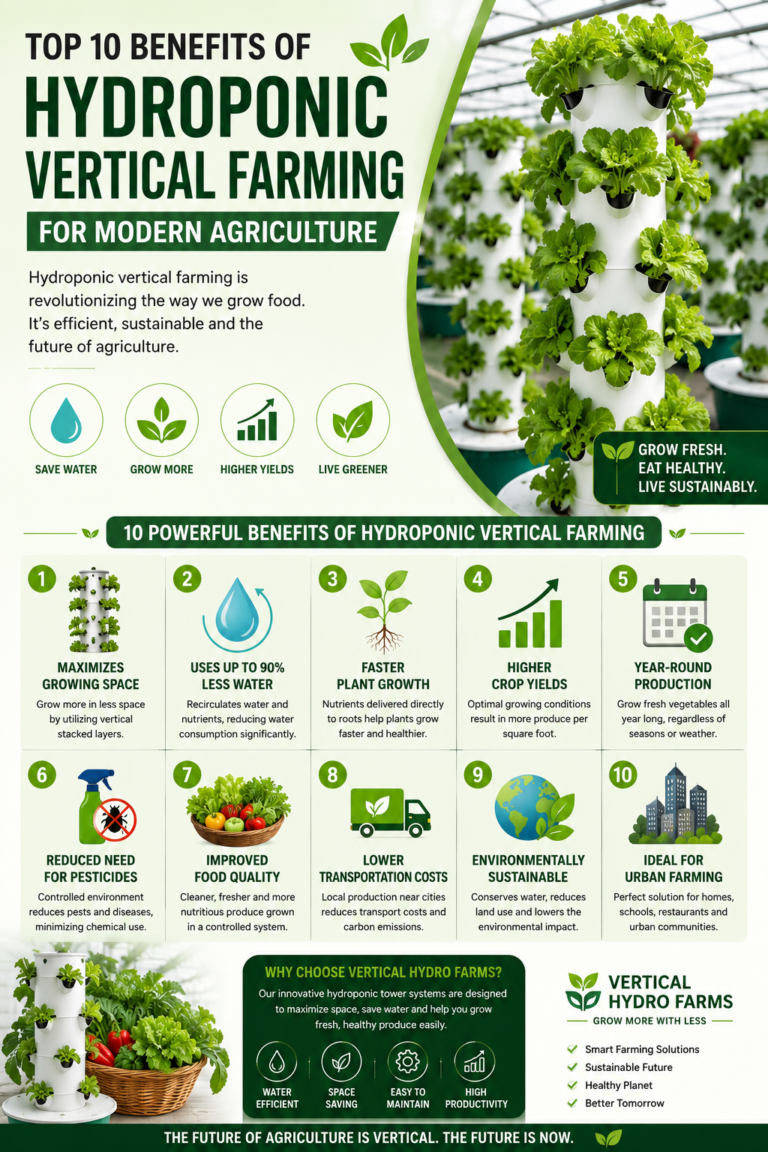
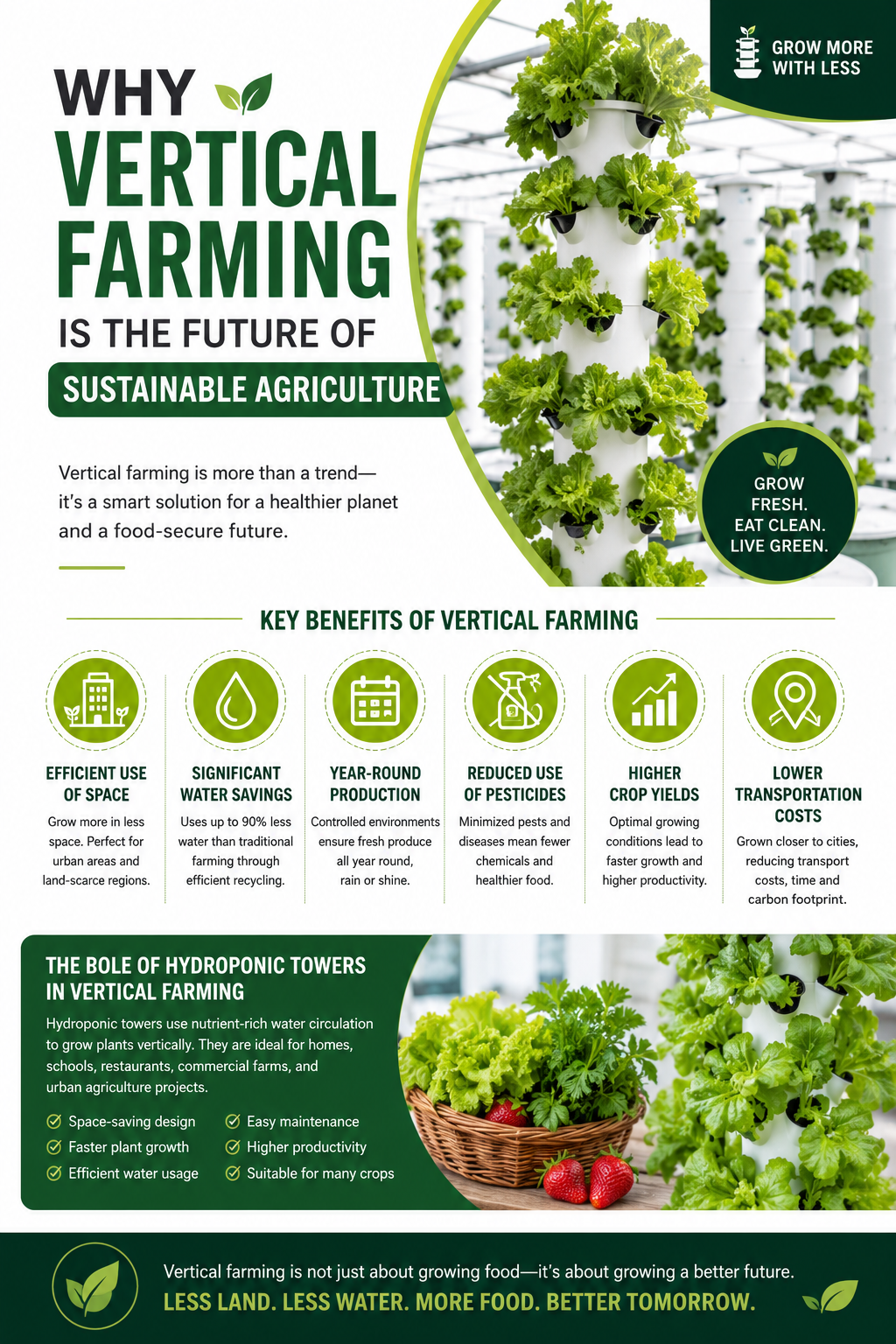
This approach significantly reduces the need for large areas of farmland and helps preserve natural ecosystems that might otherwise be converted for agricultural use. One of the most important benefits of vertical farming is its ability to conserve water. By using hydroponic or aeroponic systems, water can be recycled and reused, resulting in much lower consumption compared to conventional farming methods.
In addition, crops can be grown throughout the year because environmental conditions such as temperature, humidity, lighting, and nutrient supply are carefully monitored and controlled. This eliminates dependence on seasonal weather patterns and reduces the risks associated with droughts, floods, and other climate-related disruptions. As a result, farmers can achieve consistent yields regardless of external environmental conditions.
Vertical farming also contributes to environmental sustainability by reducing the need for long-distance transportation. Since farms can be established close to urban consumers, food travels shorter distances, lowering carbon emissions and ensuring fresher produce. Furthermore, the controlled indoor environment minimizes exposure to pests and diseases, reducing the reliance on chemical pesticides and promoting healthier crop production.
The technology also enhances food security by enabling consistent and reliable food production even in regions with limited agricultural resources. Although challenges such as high setup costs and energy requirements remain, ongoing advancements in renewable energy, automation, and efficient lighting technologies are making vertical farming increasingly practical and cost-effective. As concerns about climate change, resource scarcity, and food demand continue to grow, vertical farming presents a sustainable and resilient agricultural model that can complement traditional farming practices while helping to ensure a stable food supply for future generations.
Vertical farming is widely regarded as the future of sustainable agriculture because it offers an innovative solution to many of the challenges facing traditional farming systems. As the global population continues to increase and urbanization reduces the availability of arable land, there is a growing need for efficient methods of food production. Vertical farming involves growing crops in vertically stacked layers within controlled indoor environments, allowing farmers to maximize production in a limited space.
This approach significantly reduces the need for large areas of farmland and helps preserve natural ecosystems that might otherwise be converted for agricultural use. One of the most important benefits of vertical farming is its ability to conserve water. By using hydroponic or aeroponic systems, water can be recycled and reused, resulting in much lower consumption compared to conventional farming methods.
In addition, crops can be grown throughout the year because environmental conditions such as temperature, humidity, lighting, and nutrient supply are carefully monitored and controlled. This eliminates dependence on seasonal weather patterns and reduces the risks associated with droughts, floods, and other climate-related disruptions. As a result, farmers can achieve consistent yields regardless of external environmental conditions.
Vertical farming also contributes to environmental sustainability by reducing the need for long-distance transportation. Since farms can be established close to urban consumers, food travels shorter distances, lowering carbon emissions and ensuring fresher produce. Furthermore, the controlled indoor environment minimizes exposure to pests and diseases, reducing the reliance on chemical pesticides and promoting healthier crop production.
The technology also enhances food security by enabling consistent and reliable food production even in regions with limited agricultural resources. Although challenges such as high setup costs and energy requirements remain, ongoing advancements in renewable energy, automation, and efficient lighting technologies are making vertical farming increasingly practical and cost-effective. As concerns about climate change, resource scarcity, and food demand continue to grow, vertical farming presents a sustainable and resilient agricultural model that can complement traditional farming practices while helping to ensure a stable food supply for future generations.