Introduction
Delhi is a city of growing populations, expanding residential complexes, and increasingly limited outdoor spaces. While many residents dream of growing their own vegetables, traditional gardening often requires large plots of land, fertile soil, and significant maintenance. For apartment owners and homeowners with limited space, this can be a major challenge.
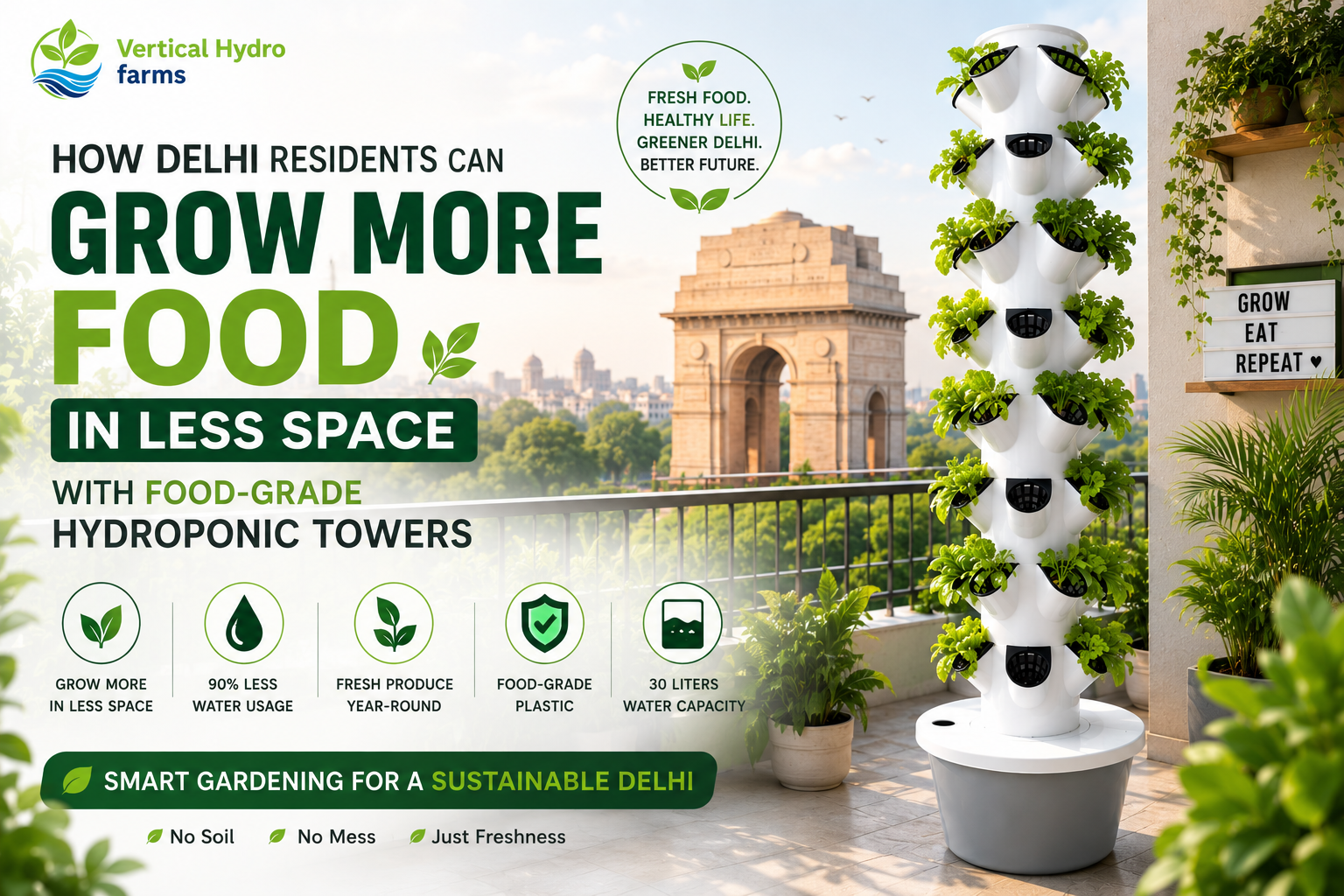
Fortunately, modern hydroponic technology is changing the way people grow food. Food-grade vertical hydroponic towers allow Delhi residents to cultivate fresh vegetables, herbs, and leafy greens in compact spaces while using significantly less water and effort than conventional gardening.
The Challenge of Urban Gardening in Delhi
As urbanization continues to transform Delhi, available gardening space has become scarce. Most apartments offer only small balconies, while many independent homes have limited terrace areas.
Common challenges faced by urban gardeners include:
- Limited growing space
- Poor soil quality
- Water shortages during summer months
- Pest and weed management
- High maintenance requirements
These challenges often discourage people from growing their own food despite increasing concerns about food quality and pesticide residues.
What Is a Vertical Hydroponic Tower?
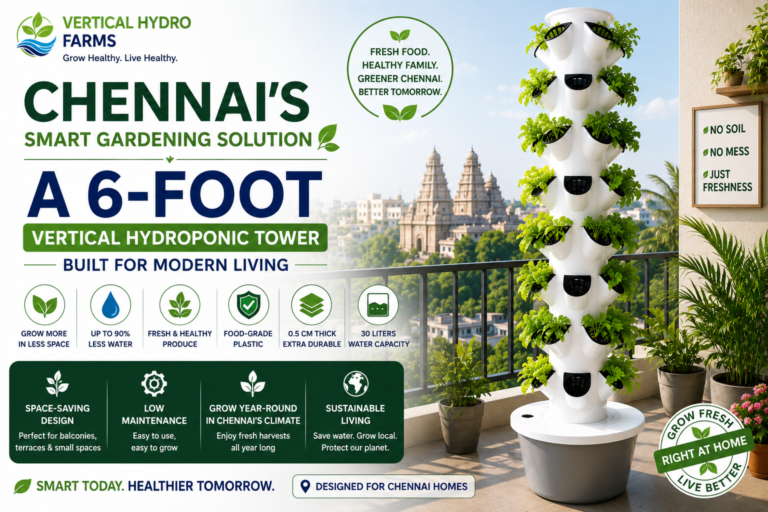
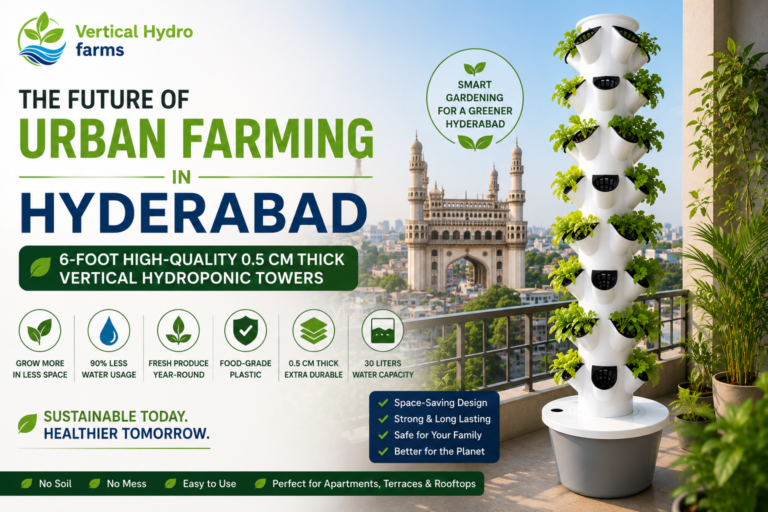
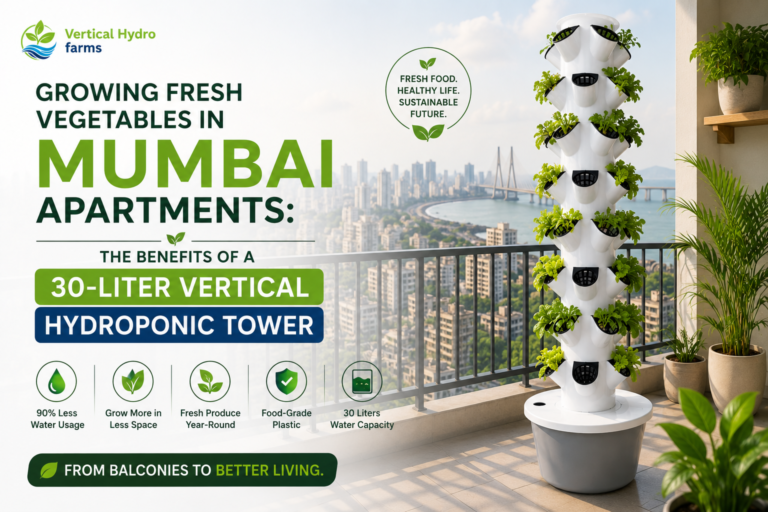
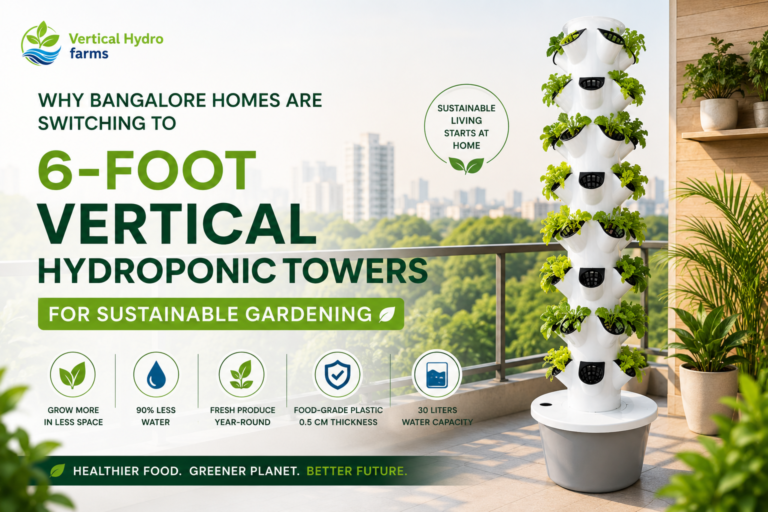
A vertical hydroponic tower is a soil-free growing system that uses nutrient-rich water to nourish plants. Instead of spreading horizontally like traditional gardens, plants grow vertically in multiple planting pockets arranged around a central tower.
This innovative design enables homeowners to grow dozens of plants in a surprisingly small footprint.
A typical 6-foot hydroponic tower can fit comfortably on:
- Apartment balconies
- Rooftops
- Terraces
- Courtyards
- Indoor spaces with adequate lighting
Why Food-Grade Hydroponic Towers Matter
The quality of materials used in hydroponic systems directly affects plant health and food safety.
Safe for Growing Edible Crops
Food-grade plastic is specifically designed to prevent harmful chemicals from leaching into the nutrient solution.
Since vegetables absorb nutrients directly through their roots, using food-grade materials helps ensure cleaner and safer produce for consumption.
Long-Term Reliability
Premium hydroponic towers constructed with food-grade plastic are more durable and suitable for continuous use in outdoor environments.
For families focused on healthy living, investing in a food-grade system provides greater peace of mind.
Grow More Food in Less Space
Vertical Growing Maximizes Production
One of the biggest advantages of hydroponic towers is their ability to maximize growing capacity.
Instead of using large garden beds, plants grow upward, making use of vertical space that would otherwise remain unused.
This allows Delhi residents to grow significantly more food in a compact area.
Ideal for Apartments and Small Homes
Even a modest balcony can become a productive mini-farm capable of supplying fresh vegetables throughout the year.
Residents can cultivate a variety of crops including:
- Lettuce
- Spinach
- Kale
- Mint
- Coriander
- Basil
- Fenugreek
- Green onions
- Pak Choi
- Cherry tomatoes
Water-Efficient Gardening for Delhi
Water conservation has become increasingly important in Delhi, especially during peak summer months.
Uses Up to 90% Less Water
Unlike traditional gardening, hydroponic systems continuously recirculate water through the tower.
This dramatically reduces water wastage and allows plants to receive consistent hydration without excessive consumption.
Large 30-Liter Reservoir
A hydroponic tower equipped with a 30-liter reservoir offers several benefits:
- Stable nutrient supply
- Reduced refilling frequency
- Improved plant growth
- Lower maintenance requirements
The larger water capacity makes the system particularly convenient for busy urban households.
Durable Construction for Long-Term Use
A high-quality hydroponic tower should be built to withstand years of use.
Strong 0.5 cm Thick Plastic
Many low-cost systems use thin materials that may crack or warp over time.
A tower made from 0.5 cm thick plastic provides:
- Greater structural strength
- Better durability
- Enhanced stability
- Longer product lifespan
This makes it suitable for both indoor and outdoor installations throughout Delhi’s varying weather conditions.
Fresh Vegetables Throughout the Year
One of the most attractive benefits of hydroponics is the ability to grow food continuously.
Unlike seasonal gardening, hydroponic systems provide a controlled growing environment that supports year-round production.
Benefits include:
- Fresh harvests whenever needed
- Reduced dependence on market vegetables
- Better control over growing practices
- Healthier and more nutritious produce
Families can enjoy farm-fresh vegetables directly from their own homes.
Environmental Benefits
Hydroponic gardening contributes to a more sustainable lifestyle.
Key environmental advantages include:
- Reduced water consumption
- Minimal land usage
- Lower carbon footprint
- Reduced transportation emissions
- Less dependence on commercial agriculture
As Delhi continues to focus on sustainable urban development, hydroponic farming offers a practical solution for environmentally conscious residents.
Cost Savings and Convenience
While hydroponic systems require an initial investment, they can provide long-term value.
Homeowners benefit from:
- Lower grocery expenses
- Reduced trips to markets
- Consistent access to fresh vegetables
- Minimal maintenance requirements
Over time, the savings and convenience make hydroponic gardening an attractive option for many families.
The Future of Urban Farming in Delhi
Urban agriculture is rapidly evolving, and hydroponics is at the forefront of this transformation.
As more residents seek healthier food options and sustainable lifestyles, vertical hydroponic towers are becoming an increasingly popular choice.
Their ability to grow more food in less space makes them ideal for modern city living, where efficiency and sustainability are essential.
Conclusion
Delhi residents no longer need large gardens to grow fresh and healthy food. Food-grade vertical hydroponic towers provide an innovative solution that maximizes production while minimizing space requirements.
With a 6-foot vertical design, durable 0.5 cm thick food-grade plastic construction, and a large 30-liter water reservoir, these systems allow homeowners to grow vegetables efficiently and sustainably throughout the year.
For anyone looking to embrace urban farming, improve food quality, and make better use of limited space, a vertical hydroponic tower offers the perfect gardening solution.