Introduction
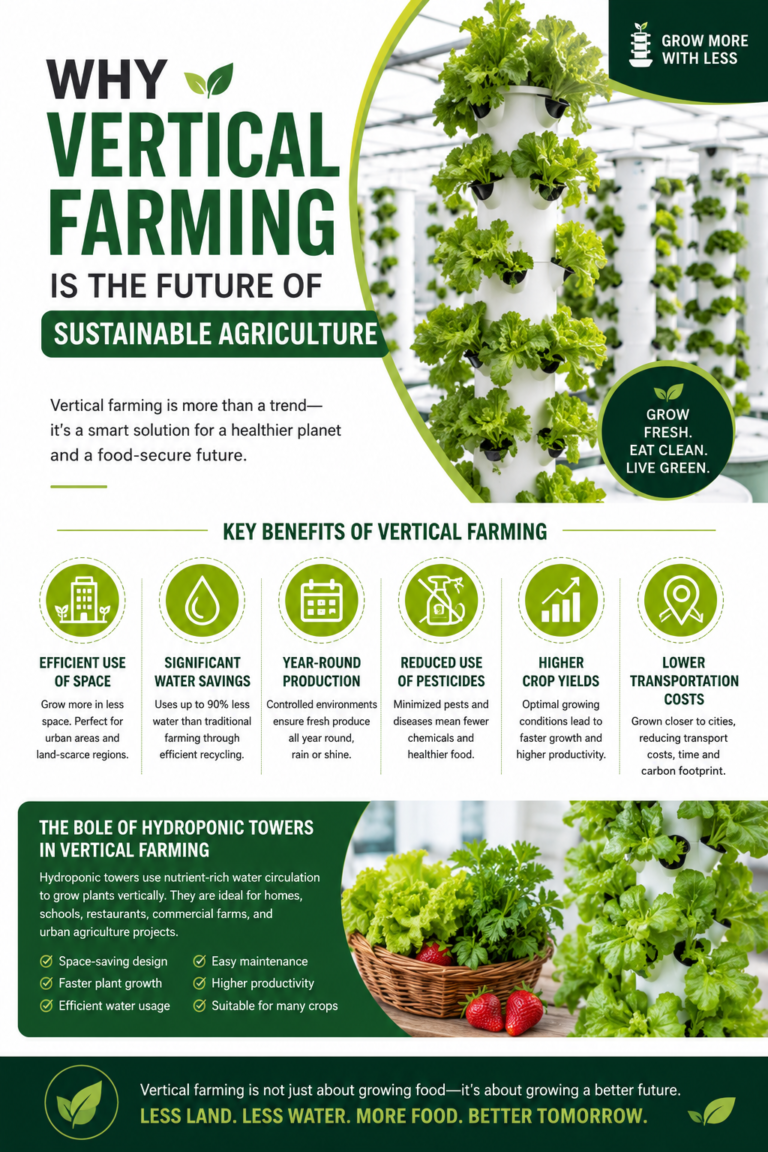
Agriculture is evolving rapidly as farmers and businesses seek innovative ways to grow more food using fewer resources. Hydroponic vertical farming has emerged as one of the most effective and sustainable solutions for modern agriculture. By combining vertical growing systems with hydroponic technology, growers can maximize productivity while minimizing water usage and land requirements.
In this article, we’ll explore the top 10 benefits of hydroponic vertical farming and why it is becoming the future of food production.
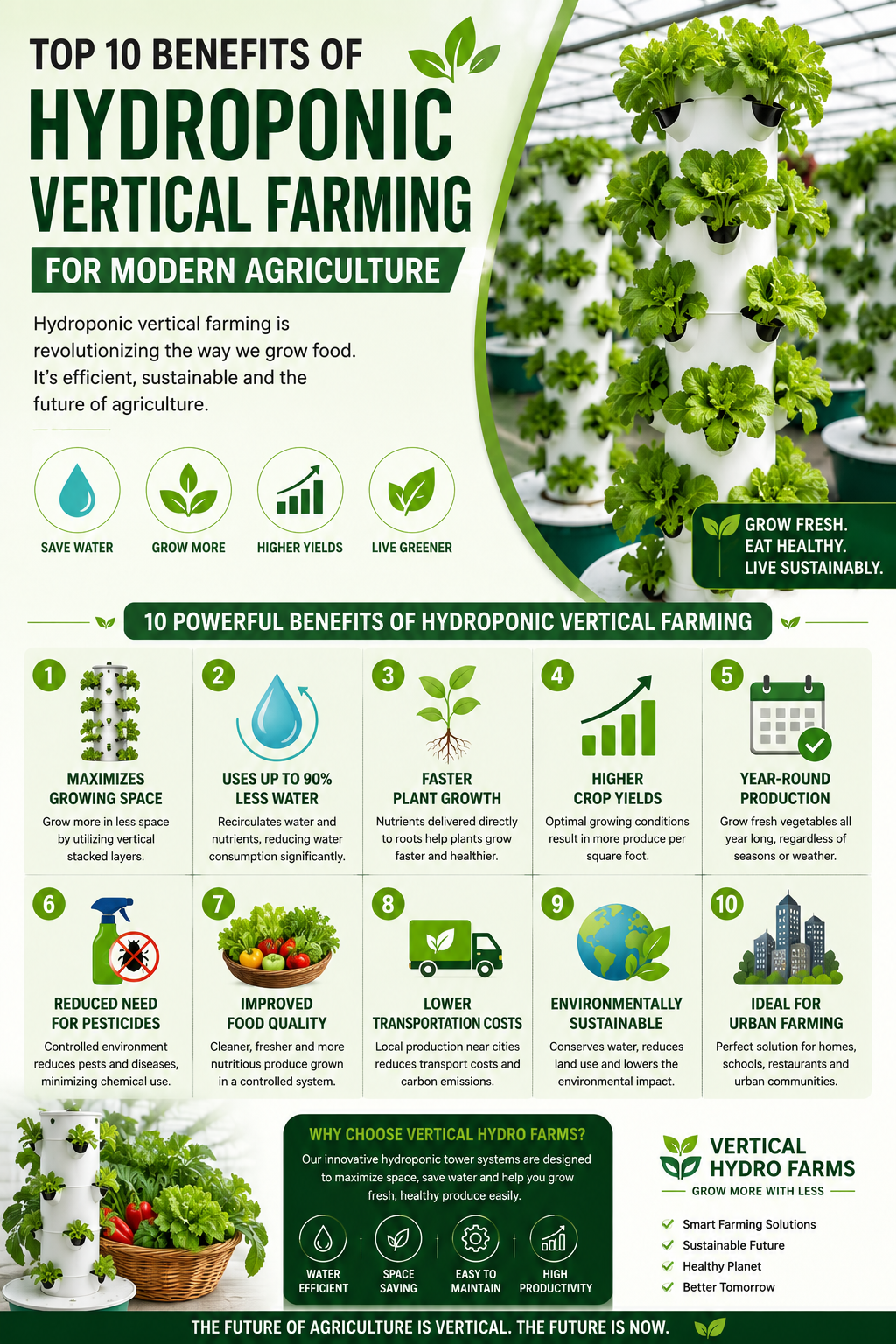
1. Maximizes Growing Space
Traditional farming requires large areas of land to produce crops. Hydroponic vertical farming utilizes vertical space, allowing multiple layers of plants to grow within the same footprint. This makes it ideal for urban areas, rooftops, greenhouses, and commercial farming operations.
2. Uses Up to 90% Less Water
Water scarcity is a growing global concern. Hydroponic systems recirculate nutrient-rich water, significantly reducing water waste compared to conventional soil farming. This makes vertical hydroponic systems an environmentally responsible farming solution.
3. Faster Plant Growth
Plants grown in hydroponic systems receive a precise balance of nutrients directly to their roots. As a result, crops often grow faster and mature earlier than those grown in soil.
4. Higher Crop Yields
Because plants receive optimal nutrients, light, and growing conditions, hydroponic vertical farms can produce substantially higher yields per square foot than traditional farming methods.
5. Year-Round Production
Weather conditions and seasonal changes often affect traditional agriculture. Hydroponic vertical farming allows growers to maintain controlled environments and produce fresh vegetables throughout the year.
6. Reduced Need for Pesticides
Controlled growing environments minimize pest infestations and plant diseases. This reduces dependence on chemical pesticides and helps produce healthier crops.
7. Improved Food Quality
Hydroponically grown vegetables are often fresher, cleaner, and more nutritious because they are harvested close to consumers and grown under carefully monitored conditions.
8. Lower Transportation Costs
Vertical farms can be established near cities and residential areas. This reduces transportation costs, lowers carbon emissions, and ensures consumers receive fresher produce.
9. Environmentally Sustainable
Hydroponic vertical farming reduces land degradation, conserves water, lowers pesticide usage, and minimizes the environmental impact associated with traditional agriculture.
10. Ideal for Urban Farming
As urban populations continue to grow, hydroponic vertical farming provides a practical solution for local food production. Homes, schools, restaurants, and commercial growers can all benefit from compact hydroponic tower systems.
Why Choose Vertical Hydro Farms?
At Vertical Hydro Farms, we are committed to providing innovative hydroponic tower solutions that help individuals and businesses grow fresh, healthy produce efficiently. Our vertical hydro towers are designed to maximize space, conserve water, and simplify modern farming.
Conclusion
Hydroponic vertical farming is transforming agriculture by making food production more efficient, sustainable, and accessible. Whether you are a home gardener, entrepreneur, school, or commercial farmer, vertical hydroponic systems offer a smart way to grow more food with fewer resources.
The future of agriculture is vertical, sustainable, and hydroponic—and that future starts today.